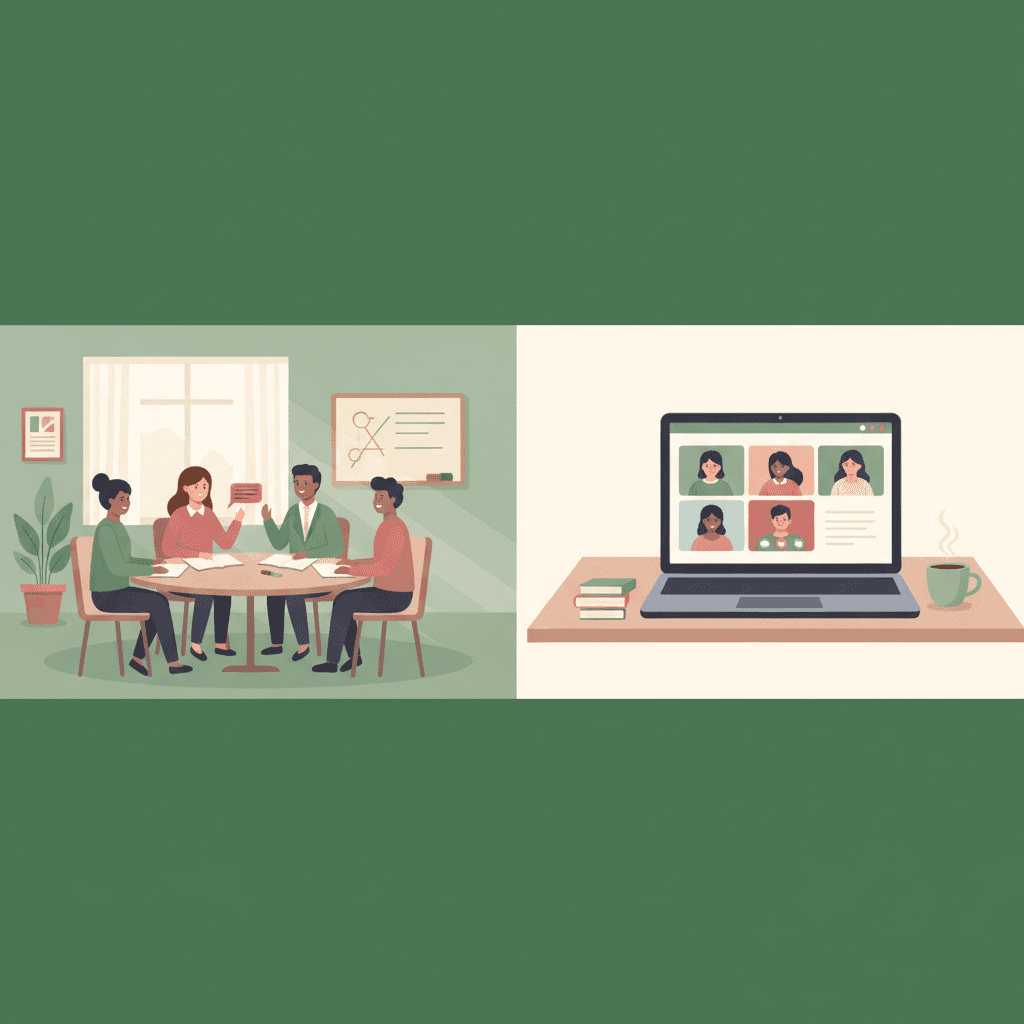
In-Person: Interaction and Structure
In-person classes remain valued for one reason: group dynamics and direct contact speed up speaking. You speak more, sooner, and hear varied accents. The regularity of a fixed schedule also helps keep momentum. Downsides: travel, fixed hours and often a higher cost. For DELF B2 candidates who need to unlock their speaking, it is often the most effective format.
Online: Flexibility and Cost
Video classes have professionalized. Small-group platforms, interactive exercises, individual tracking: the format is no longer limited to passive tutorials. For a working parent, a student with irregular hours or someone far from a city center, this is often the only viable option. Cost is generally more accessible, but discipline rests on the learner — without structure, drop-off comes quickly.
Hybrid: The Best of Both Worlds
More and more paths combine a weekly in-person class for speaking with online modules for autonomous work. This is often the most effective format to prepare for a test: classroom intensity for interactive skills, and denser solo work with modules matched to your level. Many of Sylum's partner training centers now offer this combination.
How to Choose Based on Your Profile
Ask three questions. First: how much time before the exam? Less than two months — favor an intensive in-person or hybrid format. Second: which skill blocks you? Speaking unblocks better in a group, writing in guided solo work. Third: what is your budget? In-person stays more expensive but qualifies for some funding (CPF, regional schemes, OFII). Combining sources can make a premium training affordable.